Office Location: 1817 S Main Street, Suite 10 SLC, UT 84115 | Phone 801 . 859 . 4142
Align Integration & Movement
  • Home
  • Work with Me
    • Request an Appointment
    • Rates & Insurance
    • Orthopedic & Pelvic Health Physical Therapy
    • Visceral Manipulation
    • Biofield Tuning®
    • Restore Room: Enhance your healing with Whole Body Vibration & The Vitalizer Chi Machine
    • Microcurrent Point Stimulation Therapy
    • NeuroKinetic Therapy™
    • Nutritious Movement™
    • Workshops
    • Testimonials
    • Resources
  • Blog
  • About Me
    • About Me
    • My Philosophy
  • Store
  • Podcast

Know Your Core

6/21/2016

1 Comment

 
Picture
A big part of my time in a session involves education.  Education and information for the client (anatomy, pain science, muscle function, etc.), and reeducation of the client's neuromuscular system. Our body is super smart; it finds a way to move and will continue to do this movement over and over again even though this particular strategy may not be the most effective for the health of the tissue or system.  Part of my job as a therapist is to see the non optimal strategy and teach the client how to reeducate their system for health and longevity.
One of the biggest areas of poor strategies and body confusion is at the core. The core is an area of the body that has a lot of hype.  Fitness pros are making bank teaching people how to strengthen their core to look ripped and lean. Unfortunately a "fit looking" core doesn't mean it is a functional core.

The Core
Picture
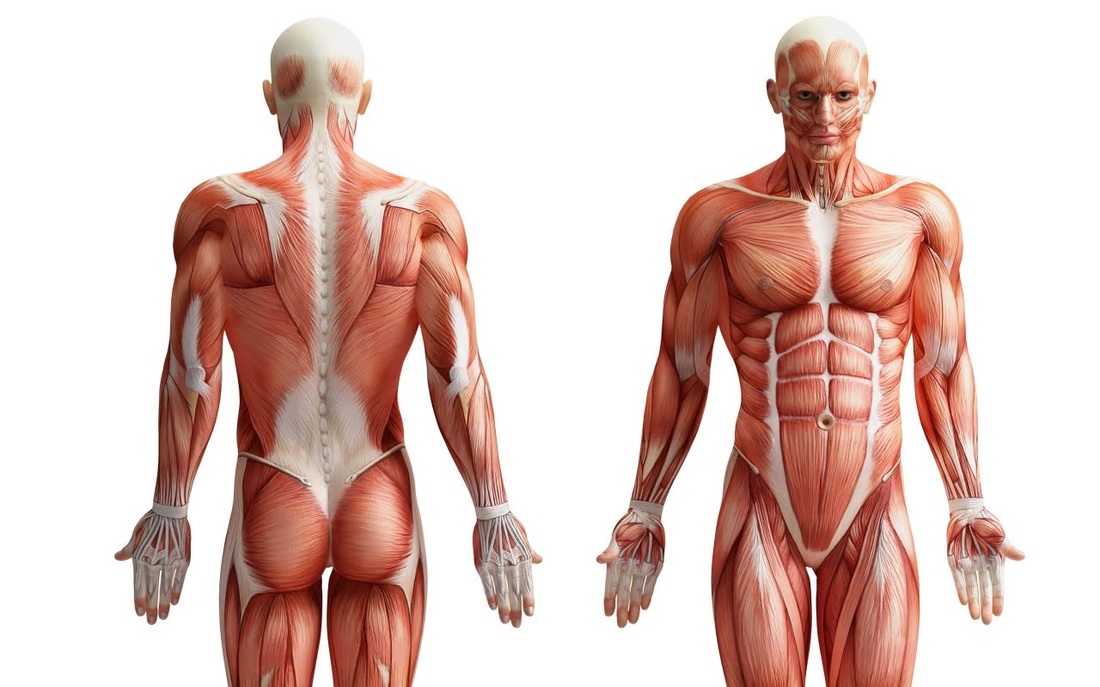
The core is the area where your head and extremities attach. We have an inner core: throat, diaphragm, deep abdominal (transversus abdominis), pelvic floor, deep back (multifidus) AND I personally like to include the psoas. The outer core is all of the other muscles.

Understanding how the core works

To understand the core, I like to start with the breath.  Little do we know that many of us are 1) holding our abs in all day so that the muscles don't get to fully move and relax or 2) barely breathing.
In an ideal world, when we are at rest whether sitting or in standing, all of our muscles should be at their resting length. Muscles can generate the greatest amount of force at their resting length: not too short, or not too long.
  • Holding in abs:  When we are holding are abs in all the time, the muscles are already contracted in the shortened position.  When the body moves and the muscles are required for support, there is not adequate movement (because it is already shortened) to generate the greatest force.  That means that the smooth orchestration of timing, coordination of the muscles have also been glitched.  Misuse of the core happens and compensations result.  Holding in the abdominals also increases pressure in the system: upward toward the diaphragm or downward toward the pelvic floor.  These pressures and tensions can affect digestion/GERD, menstruation, organ prolapse, abdominal wall separation/hernias.
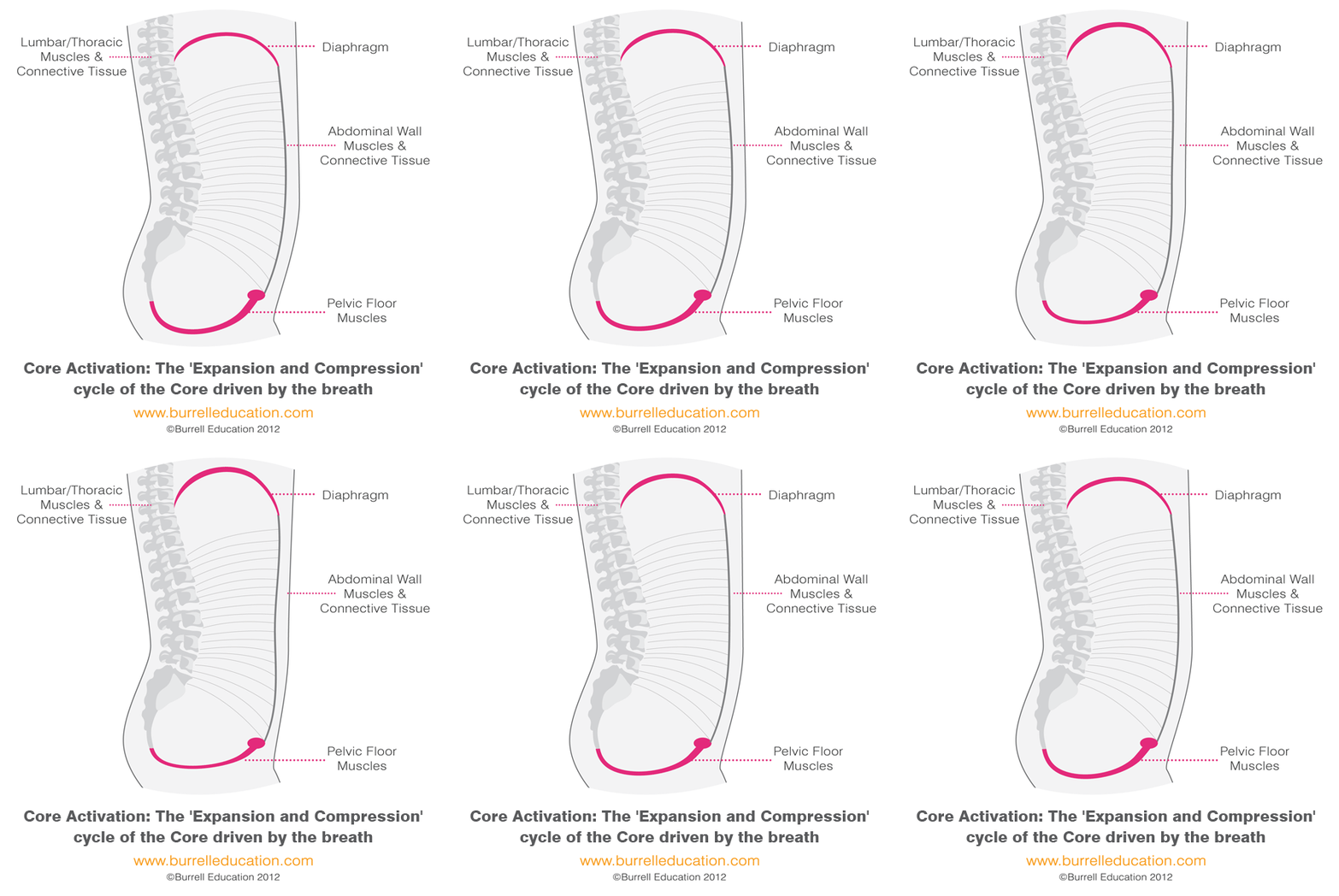
  • Barely breathing:  Many people breathe shallow, with minimal diaphragm movement and mostly upper chest and neck movement.  This does not allow for the natural active range of motion that should happen with each breath. On the inhale the diaphragm shortens, pushing downward to make room for the lungs to fill with air.  As the diaphragm shortens, the abdominals and the pelvic floor oppose by lengthening.  Then on the exhale, the abs and pelvic floor shorten and the diaphragm goes back to its resting length.  This movement allows for blood flow, oxygen delivery, optimal muscle function and management of internal pressures.  Shallow breathing can lead to a hyper-ventilatory state which can present as:  increased tension, aches and pains, poor concentration and weird sensations in the body (numb, tingling). 
Picture
I love this gif from Burrell Education. If you are interested in living your most healthy self, check out her programs: prenatal, postpartum and peri-menopause. Click on the pic to take you to her website.

The First Step to Strengthening Core:

The first step to strengthening the core is to move all the parts.  The gif above shows the movement of the deeper canister: diaphragm, pelvic floor and abdominals.  The abs and pelvic floor are opposing the diaphragm during inhale and exhale. Can you feel your pelvic floor move during breathing?  Can you feel your abs move?  You might notice that you can only move your chest at first.  See if you can start to bring awareness into: upper abdominals, then belly button, then lower abdominals, then pelvic floor (typically I have people sense the anus- we are used to holding our sphincter muscles to prevent passing gas.  See if you can let the sphincter go on the inhale, then notice if it lifts back up on the exhale). Don't force or try to take big breaths, just direct your focus.  Allow your breathing to be effortless, inhale/exhale are balanced.   Remember your core cannot be strong unless is can access it's full range of motion.  
Know your core: 1) stop holding your core tight all the time (that includes wearing spanx) and 2) learn how to let your core move during breathing. 
Susan McLaughlin is a physical therapist who specializes in the management of pelvic floor and orthopedic dysfunctions. She is the owner of ALIGN integration|movement in Salt Lake City, UT.  Helpful tips and other self care strategies can be found at www.alignforhealth.com.

1 Comment

Chair Busting

2/8/2016

2 Comments

 
Picture
For many of us, our day is spent sitting at work, sitting at school and then we come home, maybe exercise and then sit and watch TV.
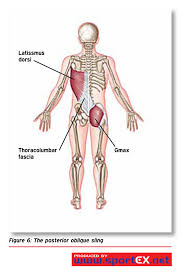
How can we minimize the deleterious effects of sitting? Stand more, walk more, and move more throughout the day.  In this post I have included 3 chair busting strategies that emphasize strengthening the posterior oblique sling: gluteus maximus, thoracolumbar fascia and the opposite latissimus dorsi.  This muscular sling is very important for lumbo-pelvic-hip stability during our gait and rotation patterns.

Get Moving!

Susan McLaughlin is a physical therapist who specializes in the management of pelvic floor and orthopedic dysfunctions. She is the owner of ALIGN integration|movement in Salt Lake City, UT.  Helpful tips and other self care strategies can be found at www.alignforhealth.com.
2 Comments

Healthy Nerves, Healthy Body

9/21/2015

9 Comments

 
Central Nervous System
Do you know what it takes to have healthy nerves? 
Our nervous system is comprised of 3 parts:
  • The central nervous system: brain and spinal cord.
  • The peripheral nervous system: nerves that exit the spinal cord and go to the head, torso and extremities.
  • The autonomic nervous system: responsible for control of the bodily functions not consciously directed, such as breathing, digestion, etc.
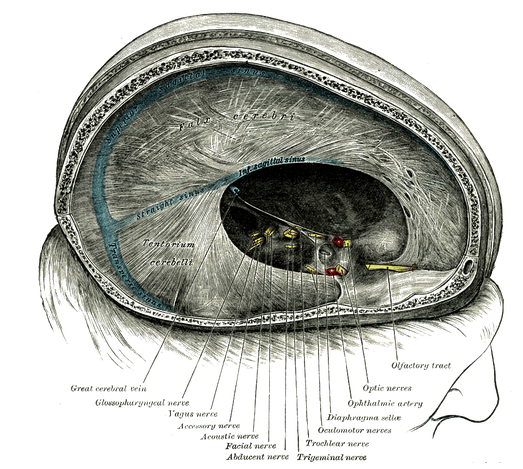
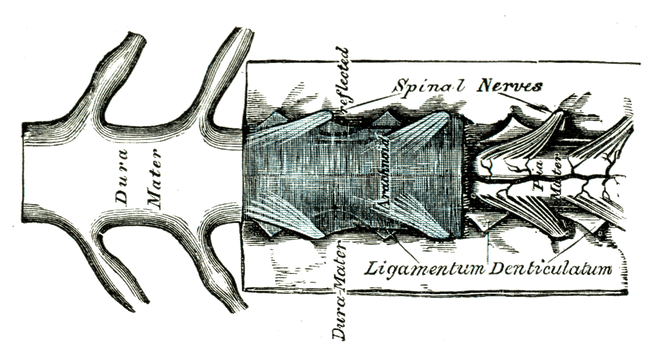
The brain, spinal cord and nerves are protected and encased in connective tissue. There are 3 membranes that line the skull and vertebral canal and enclose the brain and spinal cord.  These layers are called the meninges: pia mater, arachnoid mater and dura mater.
Dura surrounding the brain
The falx cerebri and the tentorium cerebelli are folds of the dura mater that separate the hemispheres and the cerebellum.
Dural Tube
The dura mater surrounding the spinal cord. The dura mater is the outer most layer and is the strongest of the membranes.
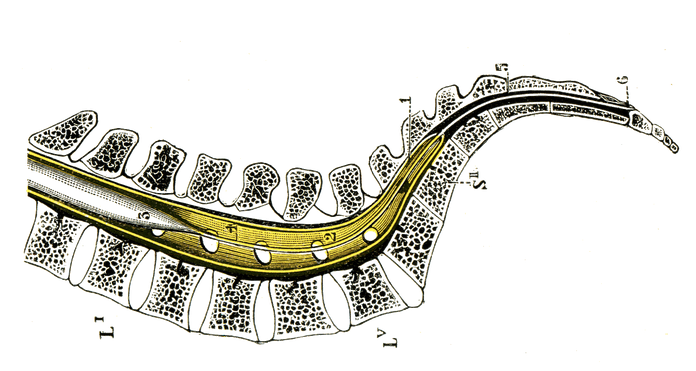
The filum terminale
The end of the spinal cord comes to a cone and then a fine strand (the filum terminale) attaches to the coccyx.
The outermost membrane, the dura mater extends from the base of the skull to the sacrum and coccyx.  The dura is attached to the lining of the base of the skull and the upper cervical vertebra. Through the remainder of the vertebral canal, the dura does not attach to the vertebra until the end of the dural sac at the second sacral vertebrae. Extensions of the dura surround the nerve roots and continue into the connective tissue coverings of the spinal nerves.  So this tube that protects the brain, spinal cord and the spinal nerves is pretty important!  In order to have healthy dura and healthy nerves we need proper movement, hydration, nutrition and sleep to keep the connective tissue vital.  A lot of our days are full of stress, spent in static positions that lead to neck or sacral compression (sitting at the computer, driving in the car) or repetitive movements that can stress and dehydrate the tissues.  Try these movements to keep your nervous system healthy.

Exercises To Mobilize Your Nervous System

Susan McLaughlin is a physical therapist who specializes in the management of pelvic floor and orthopedic dysfunctions. She is the owner of ALIGN integration|movement in Salt Lake City, UT.  Helpful tips and other self care strategies can be found at www.alignforhealth.com.
9 Comments

Skinny Jeans and Your Pelvis

7/20/2015

7 Comments

 
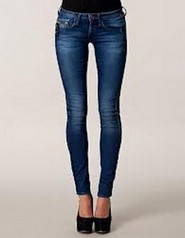
Tight jeans decrease blood flow in the pelvis.
If you follow the news or stay updated with current events via Facebook or Twitter, you probably read the story about a woman who sustained nerve damage in both of her legs after helping her friend move.  This woman wore skinny jeans and spent most of her day in a squat position cleaning out cupboards. By the end of the day her feet felt tight and numb and she couldn't walk, she kept losing her balance and falling.  Apparently the jeans had to be cut off of her due to the swelling, and it took her 4 days in the hospital to recover.  

When our body can't move freely and our tissues are compressed, this will lead to decreased blood flow, decreased nerve conduction and decreased tissue hydration.  Over time this can lead to lymphatic congestion, stiff joints, poor circulation and pain. Tight pants also affect how we are able to sit, bend and squat.  Have you noticed how you sit in yoga pants versus jeans or pants?  
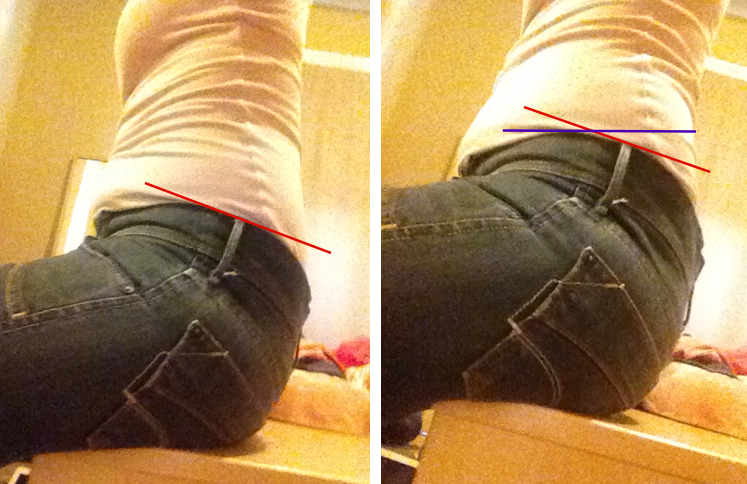
sitting in a posterior pelvic tilt
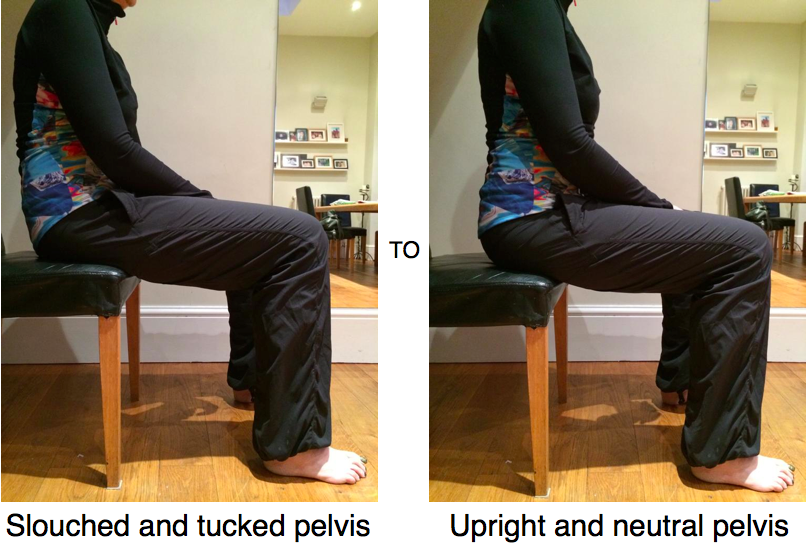
Here I am in tight pants. In the pic on the left I am sitting like I normally want to do: tucked and posteriorly tilted with my pelvis. The red line shows the tilt of my pelvis. On the right, I am trying to sit as best that I can to neutral with my pubis and ASIS vertical. The blue line shows how far I am from neutral.
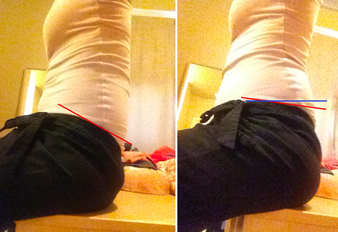
sitting with a neutral pelvis
Here I am in loose pants. In the pic on the left again I am sitting in a posterior pelvic tilt. In the pic on the right I have positioned my pelvis to neutral (I am a little off on this as shown by the blue line. Don't judge, my mobility is a work in progress).
Chronic positioning of the pelvis into a posterior tilt can lead to all sorts of bad things like:
  • Changes in pelvic organ position.  A tipped uterus can cause painful menstruation, urinary frequency and urgency.  For more info on this click here. 
  • Changes in muscle and connective tissue.  Tissue adapts to how it is used, so habitual chronic positioning sets the stage for potential low back issues, SI pain, decreased hip mobility, tight and weak pelvic floor, hip flexors, hamstrings and calves.
  • Meralgia paraesthetica, pain and numbness on the front of the thigh.
  • Digestive issues: abdominal pain, bloating, heartburn, indigestion.
Please consider how your pants might be affecting your pelvic health.  Even if you wanted to try to sit with a neutral pelvis, your jeans may not allow you to get there.  Sometimes it is the simple changes that get you moving in a healthy direction.

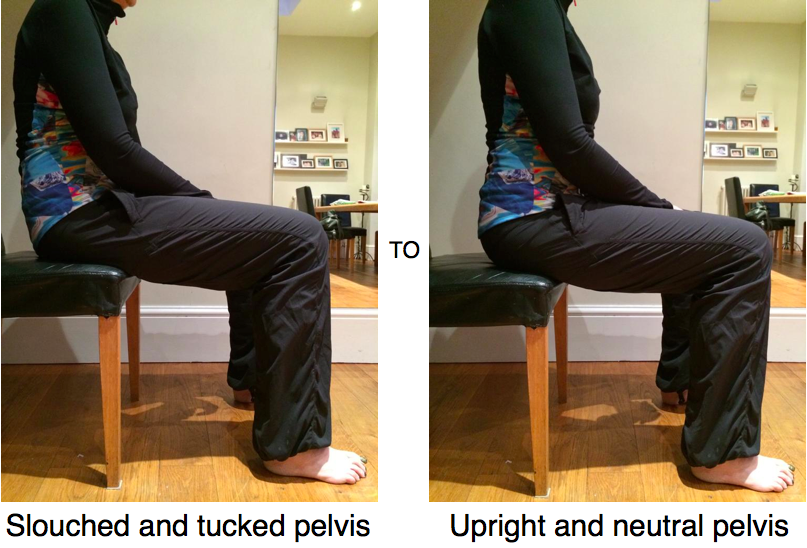
Neutral Pelvis in Sitting

Neutral Sitting

Untuck Your Pelvis

Susan McLaughlin is a physical therapist who specializes in the management of pelvic floor and orthopedic dysfunctions. She is the owner of ALIGN integration|movement in Salt Lake City, UT.  Helpful tips and other self care strategies can be found at www.alignforhealth.com.
7 Comments

Freedom From Pelvic Pain

7/6/2015

2 Comments

 
Freedom From Pelvic Pain owner, David McCoid and Katy Bowman, creator of Restorative Exercise™
David McCoid, owner of Freedom From Pelvic Pain with Katy Bowman, creator of Restorative Exercise™.
Back in May I travelled to the Netherlands to be a teaching assistant for the Restorative Exercise™ Specialist (RES) Certification Week.  I was fortunate to meet so many amazing people from all over the world!  One person that made a big impression on me was David McCoid (pictured here on the left).  David certified as a RES back in April 2014 and was in the Netherlands for a few days to soak in the learning.
I got to chat with him on our commute one morning and was so blown away by his personal journey out of pelvic pain.  As a pelvic health specialist, his experience really lit up for me: David lived with pelvic pain for 14 years, he travelled to see specialists in Italy for prostate injections, and in the US for pelvic PT treatments with renown therapists, and finally had pudendal nerve surgery (3 different times!).
Eventually he found Restorative Exercise™ and he was able to move himself out of pain! I was so inspired by his story that I wanted share his experience.  David has asked me to delete his interview because he is not practicing the Katy Bowman method anymore.
Susan McLaughlin is a physical therapist who specializes in the management of pelvic floor and orthopedic dysfunctions. She is the owner of ALIGN integration|movement in Salt Lake City, UT.  Helpful tips and other self care strategies can be found at www.alignforhealth.com.
2 Comments

Exercises For Computer Posture 

1/12/2015

0 Comments

 
Computer Posture Exercises
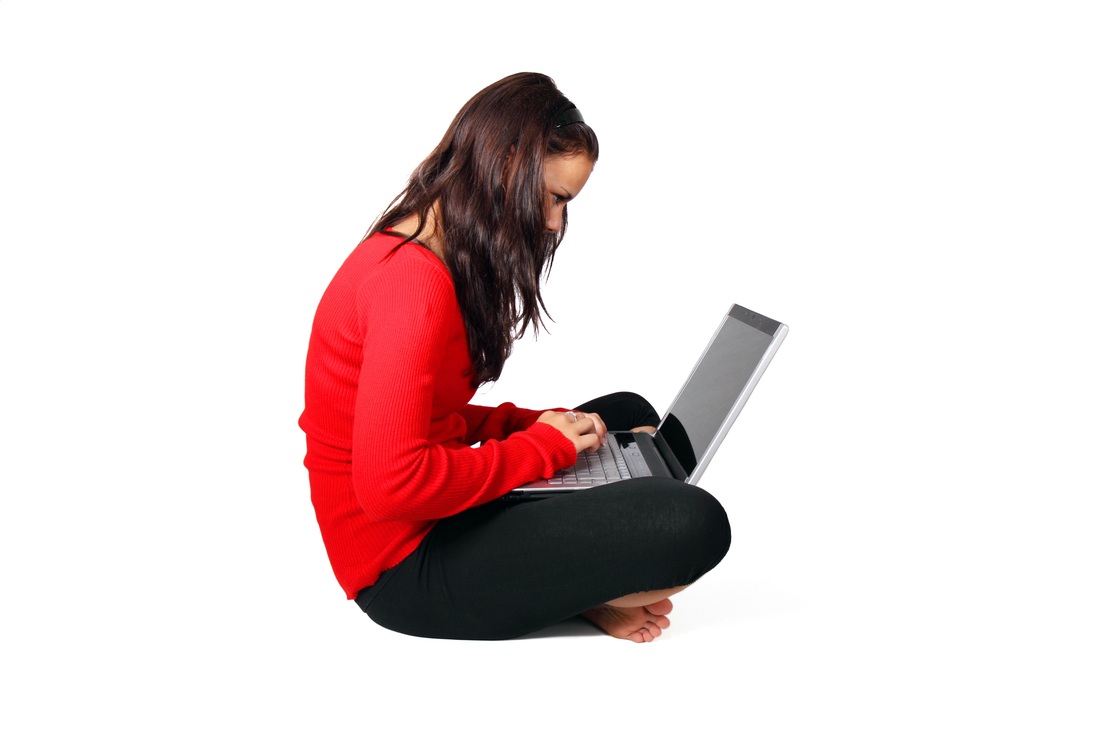
A common computer position
Computer posture:
  • Forward head 
  • Upper cervical extension
  • Round (internally rotated and forward) shoulders
  • Hyperkyphosis of the thoracic spine
  • Flexion of the lumbar spine
  • Tucked pelvis
  • Stiffness in the entire  body from long-term sitting

Does this look familiar?  Look around your office...  Let's face it, it is prevalent, and we all do it to some extent. Hopefully you know that this position over time is hazardous to your health.... Just say "no".  This post is dedicated to beating the slump: 2 exercises to de-slouch the spine, and free up the neck, arm and shoulder girdle.
STEP 1:  Get some stimulus to the lats and the muscles between the shoulder blades.  As the arms have moved forward to type on the keyboard, these muscles are now resting in a lengthened position.  This active shoulder girdle stretch takes the muscles into more of a stretch, just like a sling shot, so they can contract back into resting position.

STEP 2:  Stretch the neck and arm.  Lengthen the tissues in the entire arm and neck by holding onto a door jam and leaning away.  This provides a traction stimulus to the wrist and shoulder, which is a wonderful reprieve after sitting hunched in a ball at the computer.

STEP 3:  Get up out of your chair every 30 minutes.  Walk to the water cooler, stretch your arms to the ceiling, stretch your legs, something simple before sitting down again. 

Susan McLaughlin is a physical therapist who specializes in the management of pelvic floor and orthopedic dysfunctions. She is the owner of ALIGN integration|movement in Salt Lake City, UT.  Helpful tips and other self care strategies can be found at www.alignintegrationandmovement.com.

0 Comments

Self Care for Hip, Groin, and Back Pain

10/1/2014

25 Comments


Self Care Steps:

Picture
This blog is for those of you who have hip pain, groin pain, hip impingement, sciatica, SI joint pain, or low back pain. And if you don't have any of these, then you are lucky and prevention is the best medicine!
Hip mobility is paramount for a healthy body and spine. During an evaluation I like to observe a static standing assessment, a functional movement assessment, and then perform a passive mobility assessment.  
People with back/hip/groin pain often have a postural position of "butt gripping" (read a great article about it here Diane Lee).  In this position, the pelvis is thrust forward and the deep hip rotators are contracted. When these muscles are overactive, they push the head of the femur into the front part (anterior) of the hip capsule which can interfere with hip motion: hip flexion (bringing the knee toward the chest) and internal rotation (turning the thigh inward).
On the functional exam I will see an inability to go into a deep squat, or the hips will shift to the opposite side during the squat.  On the passive motion test there will be a limitation in hip flexion, and they may express pain with a combination of movements: hip flexion, adduction and internal rotation.
Standing in alignment and learning how to let go of the grip in the rotator muscles is essential for healing, as well as reprograming the normal glide of the head of the femur.  In normal motion, as the knee moves toward the chest, the head of the femur should glide back and down.  Due to the tightness of the rotators, the back (posterior) hip capsule can be restricted.  Restoring the tissues and the hip motion can be achieved through simple self mobilizations.
Standing alignment for back and hip health
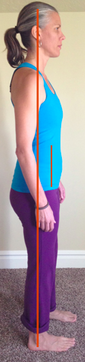
1. Standing Alignment: vertical leg, torso stacked over the legs.  Think about a plumbline going through the midpoints of the shoulder, hip, knee and front of the ankle bone.

2. Release Deep Hip Rotators:  Lie down on your back with your knees bent.  Place a tennis ball under your left butt cheek just to the side of your sacral bone.  Rock your knees to the side and return to start position 3 times.  Find a new spot and repeat.  Complete in 3-5 different areas and then switch sides.
Piriformis Release with tennis balls
3.  Hip Release and Hip Glides:  this is a video demonstrating how to do the self mobilizations to regain normal motion.
Susan McLaughlin is a physical therapist who specializes in the management of pelvic floor and orthopedic dysfunctions. She is the owner of ALIGN integration|movement in Salt Lake City, UT.  Helpful tips and other self care strategies can be found at www.alignintegrationandmovement.com.

25 Comments

How to Squat

3/20/2014

19 Comments

 
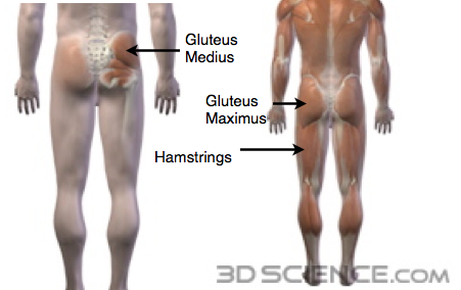
Posterior Chain muscles used during the squatPosterior chain muscles used during the squat.
If you didn't know already, the squat is hot. Everybody is doing it..... The squat is one of the most effective ways to strengthen your glutes.  But.... not every body is ready to bust the move and go deep into the squat position without losing their balance or hurting their knees.  
This post demonstrates how to perform a double leg squat and a single leg squat with a vertical shin.  A vertical shin helps take the load from the knees and puts the weight back into the posterior chain: hamstrings and glute max.  The single leg squat also engages the gluteus medius, which is important for stabilizing the pelvis.


Double Leg Squat

Single Leg Squat

Susan McLaughlin is a physical therapist who specializes in the management of pelvic floor and orthopedic dysfunctions. She is the owner of ALIGN integration|movement in Salt Lake City, UT.  Helpful tips and other self care strategies can be found at www.alignintegrationandmovement.com.

19 Comments

How alignment can affect fetal positioning

2/9/2014

8 Comments

 
Daily habits can affect position of babe in womb
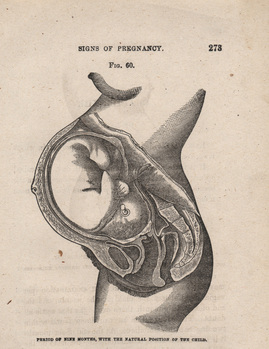
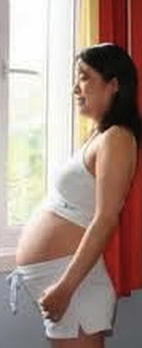
Recently I had a conversation with a doula about fetal positioning.  She and many of her doula colleagues have noticed an increase in clients that struggle during labor due to posterior positioning of the fetus.  Posterior occiput position is when the baby's head is down and facing mom's belly.  A normal presentation is when the head is down and the baby's head is facing the mom's sacrum as in the picture to the left.   I would like to share some information from the workshop I presented to our Salt Lake Birth Circle group.
Incidence and consequences of Occiput Posterior (OP):
  • 15-30% present posterior at onset of labor  
  • 5% presentation at delivery
  • 5.5% of OP accounts for 12% of all cesarean deliveries for lack of progress or dystocia
  • 7 fold increase in the incidence of 3-4th degree perineal tears (into anal sphincter) 

Why are babies malpositioned?

Penny Simkin, PT and author of  The Labor Progress Handbook attributes fetal malposition to cultural habits and trauma.
Cultural Habits:
    • Slouching
    • Crossing legs
    • Sitting too much, driving
    • Standing with pelvis imbalanced
    • Too little or too much exercise
Traumas:
    • Sport injuries/falls
    • Motor vehicle accidents
    • Assault
    • Fears                                                                           

What can we do about it?

  • Stand & Sit in alignment
  • Release tension in your hip flexors and pelvic floor
  • Walk 3-5 miles a day

Stand and Sit Alignment

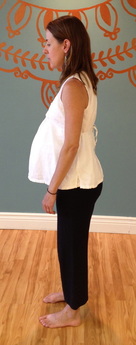
Good Standing Posture during pregnancy
Stand in alignment.
If we had a plumb line coming down from her shoulder, you can see that her shoulder, hip, knee and ankle are stacked up in a line.
The pelvis is neutral in this position and the load is transmitted through the legs. The ribcage is stacked over the pelvis, so the core is able to engage and support.  The muscles of the pelvic floor are in a more optimal position to generate force.

Optimal sitting alignment
Sit in alignment.
Sit on your ischial tuberosities, not your sacrum.
Avoid sitting slumped on cozy couches, and driving in bucket seats. For a demonstration see video to the right.
Anterior pelvis sway in pregnancy
Poor standing alignment.
If we had a plumb line coming down from her shoulder, there wouldn't be any joint stacked underneath.
The load is being transmitted to the front of her abdominal wall (which can create abdominal separation), to the front of her pelvis (which can create pubic symphysis pain) and to her low back and SI joints.
The ribcage is not stacked over the pelvis which interferes with the optimal function of the core: diaphragm, pelvic floor and deep abdominal muscles.

Release Tension in your Hip Flexors and Pelvic Floor

Psoas muscle tension can affect engagement into pelvic inlet
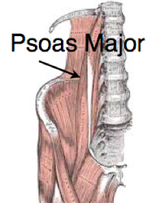
 Attaching superiorly at the spine (to the transverse processes and lateral surface of thoracic vertebra 12 to the last lumbar vertebra and corresponding discs) and traversing down and forward through the pelvis to attach to the inside of the upper leg (lesser trochanter).  Tension in the psoas can limit the fetal space as the baby descends into the pelvic inlet.

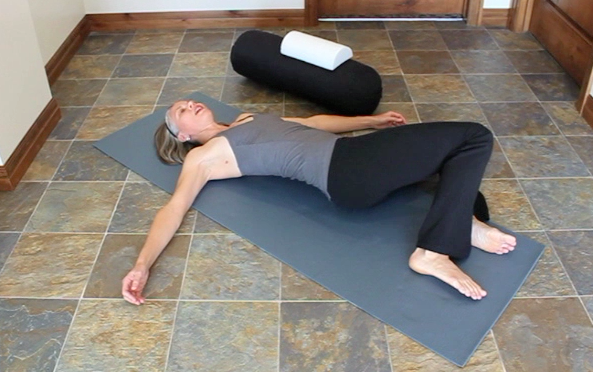
Psoas Release on the floorPsoas release
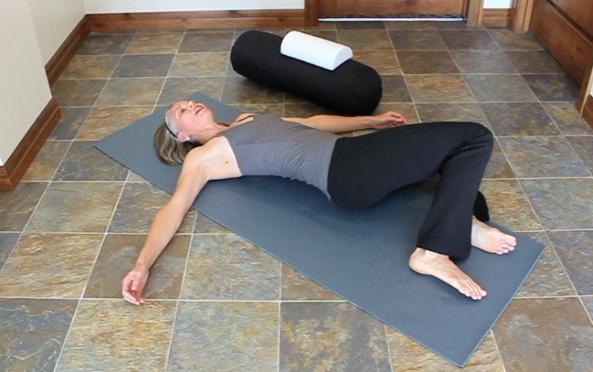
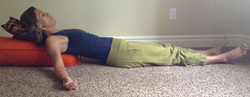
Place the bolster near the bottom of the shoulder blades.    Make sure that the ribs remain relaxed and flush with your abdominal wall.  Extend the legs. Make sure that the back of your thighs fully touch the floor. If they don’t, you need to bolster up higher.  Relax here for 5-10 min.  Allow your legs and torso to relax.  Practice breathing.  Focus on allowing the pelvic floor muscles to relax on the inhale. Tension in the pelvic floor can pull on the sacrum, limiting sacral mobility that is necessary to widen the pelvic outlet.


If you are in the Salt Lake area you can learn about the topics introduced in this blog and more, in my prenatal workshop, Birth Mechanics: Get Your Body Tuned up for Delivery.  
Susan McLaughlin is a physical therapist who specializes in the management of pelvic floor and orthopedic dysfunctions. She is the owner of ALIGN integration|movement in Salt Lake City, UT.  Helpful tips and other self care strategies can be found at www.alignintegrationandmovement.com.
8 Comments

Foot Pain Relief: Help for Bunions and Neuromas

12/17/2013

14 Comments

 
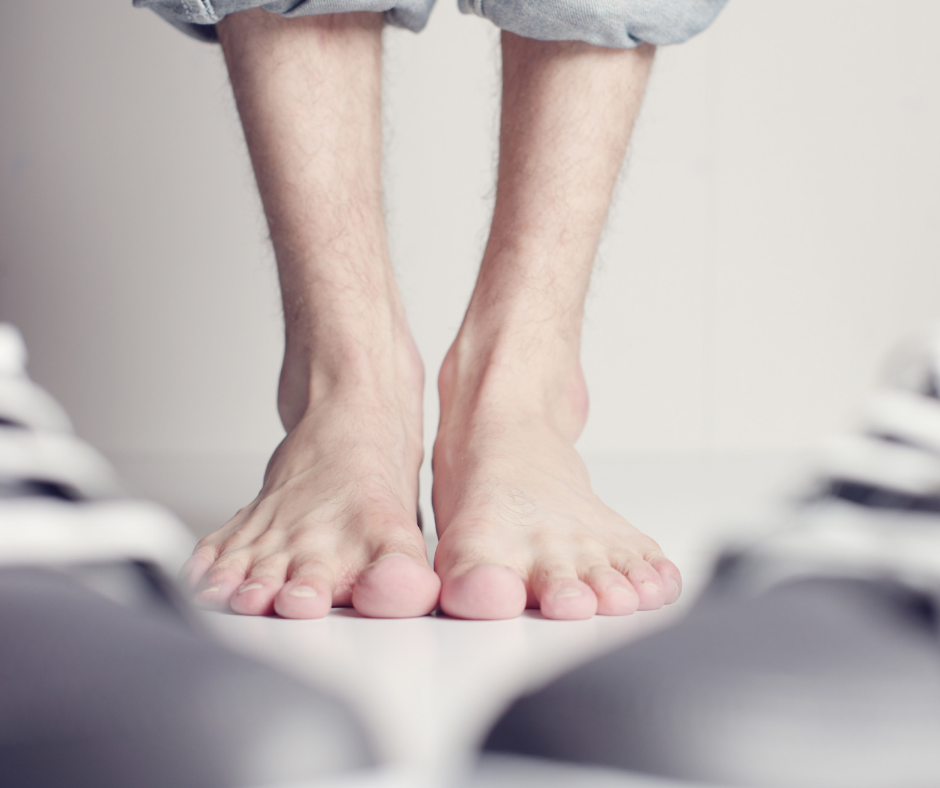
Foot pain relief
Results from a systematic literature review suggest that women experience foot pain more than men, and that the most common site of pain are the toes and the forefoot, AND that two-thirds of the population studied described moderate disability for daily living.   You can't walk very far if you feel like you have a pebble in your shoe, or every time you take a step you feel burning pain or tingling at the base of your toes.
A bunion occurs from pressure at the side of the big toe (hallux).  This pressure shifts the big toe toward the others and the joint can become swollen, sore and enlarged.
A neuroma occurs at the bottom of the foot typically under the 3rd and 4th toes.  The pressure at the forefoot irritates the plantar nerve and the tissue around the nerve can become dense and hard.  Because the nerve is irritated, people may experience burning, tingling, or numbness between the toes and foot.

What contributes to bunions and neuromas?

Footwear

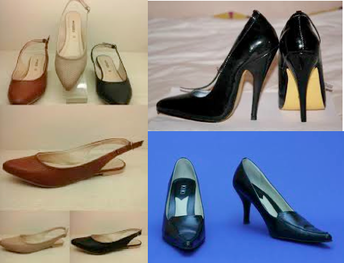
Typical women's shoes with a narrow toe box
Footwear:  The pic above shows a few shoe styles.  Each of these shoes have a very narrow toe box (typical of a women's shoe) which crunches all of the toes together. Most shoes have at least an inch heel, and high heels have a good 3 inches.  The height of the heel pitches the weight forward onto the forefoot, creating excessive load which can lead to nerve irritation, inflammation and tissue changes.
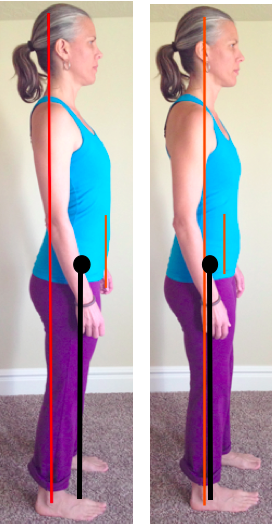
Forefoot Loading:  The pic on the right demonstrates 2 different ways to stand.  It is very common to see the pelvis thrust forward as in the 1st pic.  Notice that weight is shifted onto the forefoot.  The 2nd pic demonstrates neutral stand with the weight distributed toward the heel.

Forefoot loading

Standing alignment: loading the forefoot creates excessive pressure, nerve irritation and inflammation
Forefoot loading creates excessive pressures that lead to nerve irritation, inflammation and tissue changes.

Simple Steps to Eliminate Foot Pain

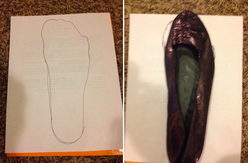
Shoes with a narrow toe squish toes
1.  Take a piece of blank paper.  Stand barefoot on the paper and outline your foot with a pen.  Take this paper to your closet and compare the width of your shoes to the outline.  Don't wear the shoes where you can't fit your toes in the toe box, and the outline extends beyond the shoe.  Notice that the shoe sits inside of the outline in some places; don't wear these shoes!  Find shoes that do not have a heel.  If you are used to wearing a higher heel you will need to gradually transition to lower heels so your tissues have time to adapt (give yourself 4-6 wks before you transition for each .5 to 1 inch).
2.   Learn how to stand in alignment.  See pic above. Or read this blog.
3.   Wear toe spacers.  Yes, you should be able to see space between your toes!  There are many products on the market. These are my favorite: Correct Toes.  Cool thing about these is that you can wear them in your shoes!  Very comfortable (but you have to have a wide enough toe box in your shoe). If you have a bunion you may want to test to see if this will be comfortable for you before purchase: take your big toe and pull it away from your other toes as far as you can, and then lift it up.  If there is discomfort in the joint then your toe is probably compressed, and it would be good for you to see me, or your local PT (or chiro, osteo, etc) to work with you.

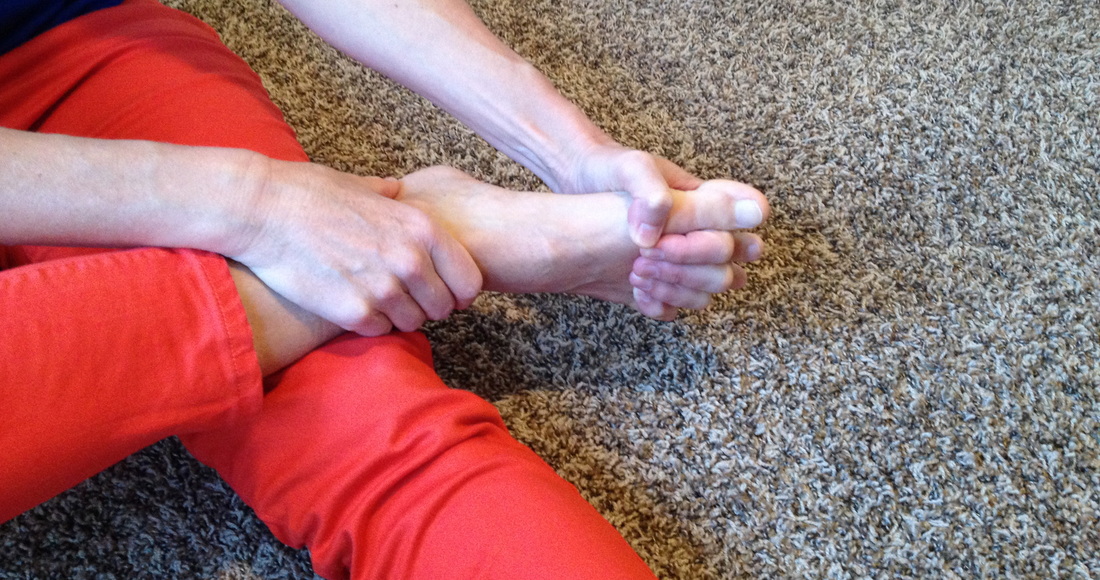
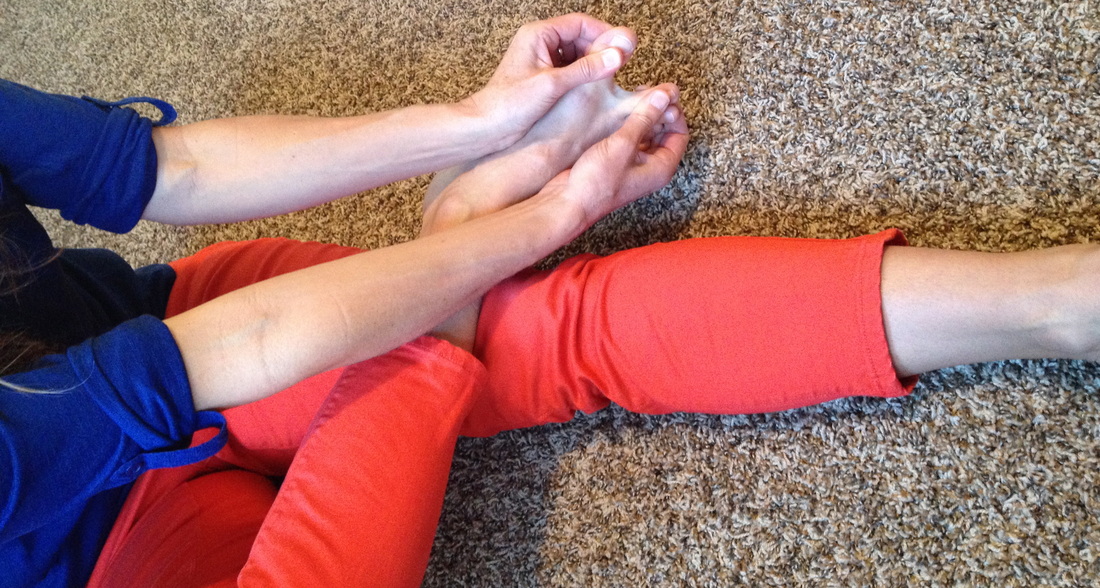
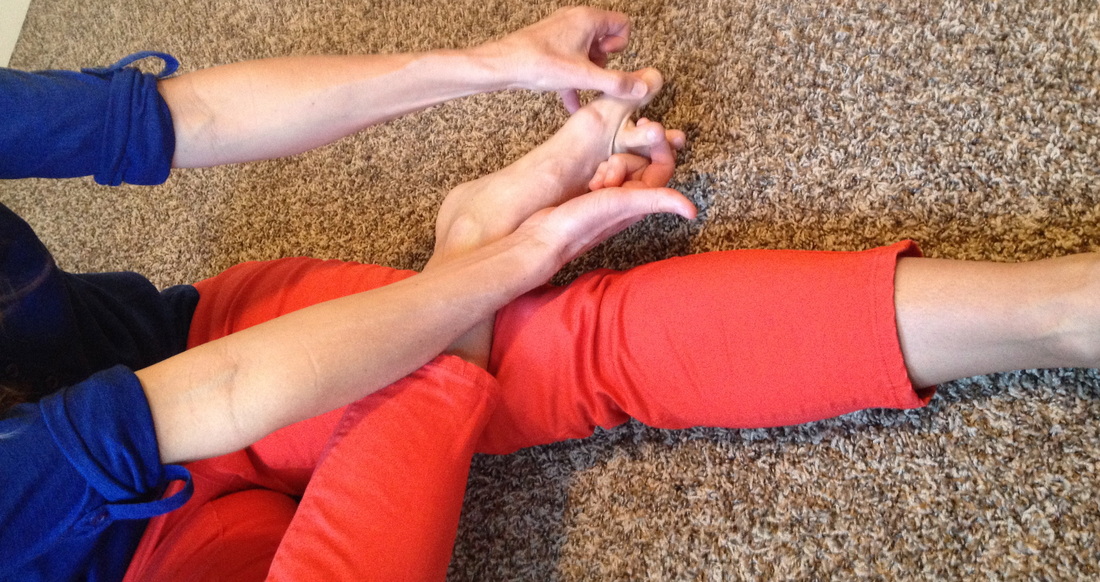
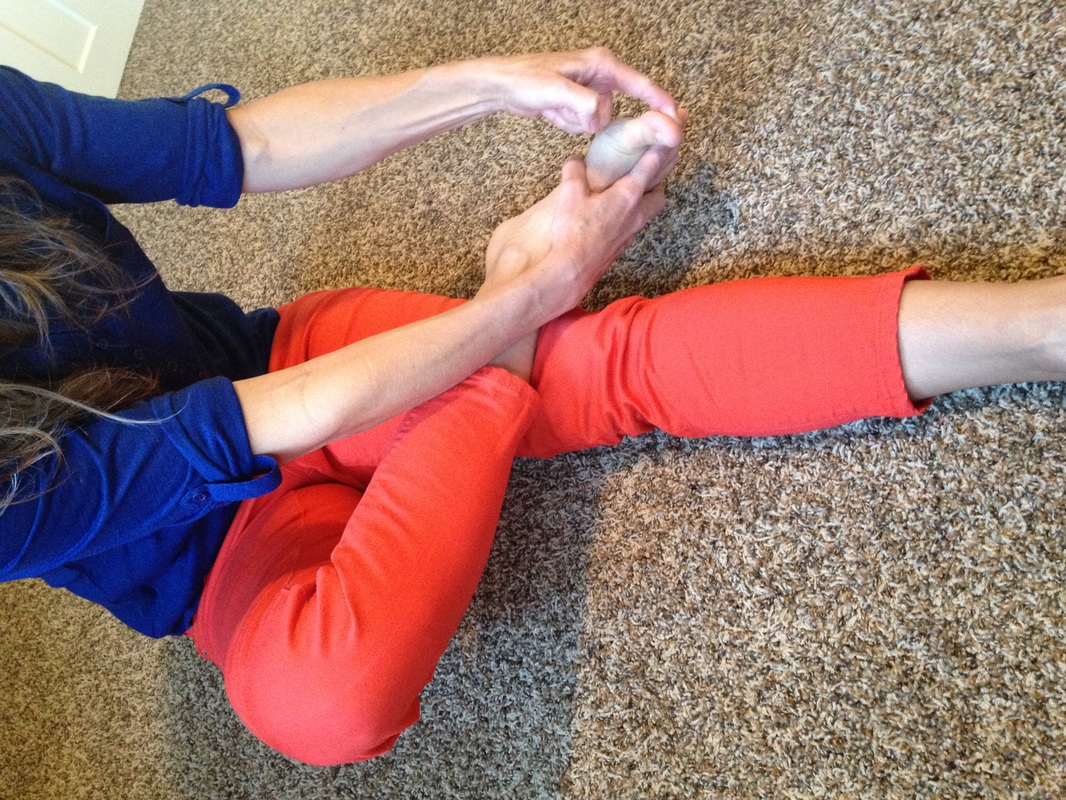
Exercise your feet

reduce foot pain with toe stretching
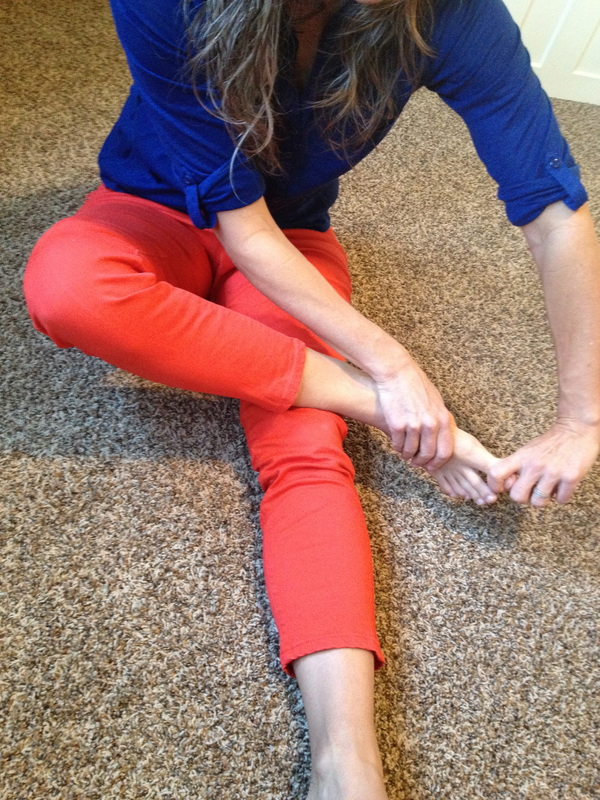
Interlace your fingers between your toes. Try to get your fingers all the way to the bottom. You can stretch your toes by pulling them down and back, or just hold your foot 1-2 minutes each side.
toe stretch to decrease foot pain
Manually separate your toes and hold in a stretch for a few seconds. Do this on all toes and both sides.
Mobilize toes to decrease foot pain
Stretch the big toe down and the second to up. Then stretch the second toe down and the third to up. Continue for all toes.
Stretch the big toe to improve gait
Reverse directions. Pull big toe back and second toe down. Complete all toes.
Decompress the toe joints to improve foot health
Hold onto the forefoot and pull each toe, then give a little twist to the left and to the right.
Reduce bunions with this stretch
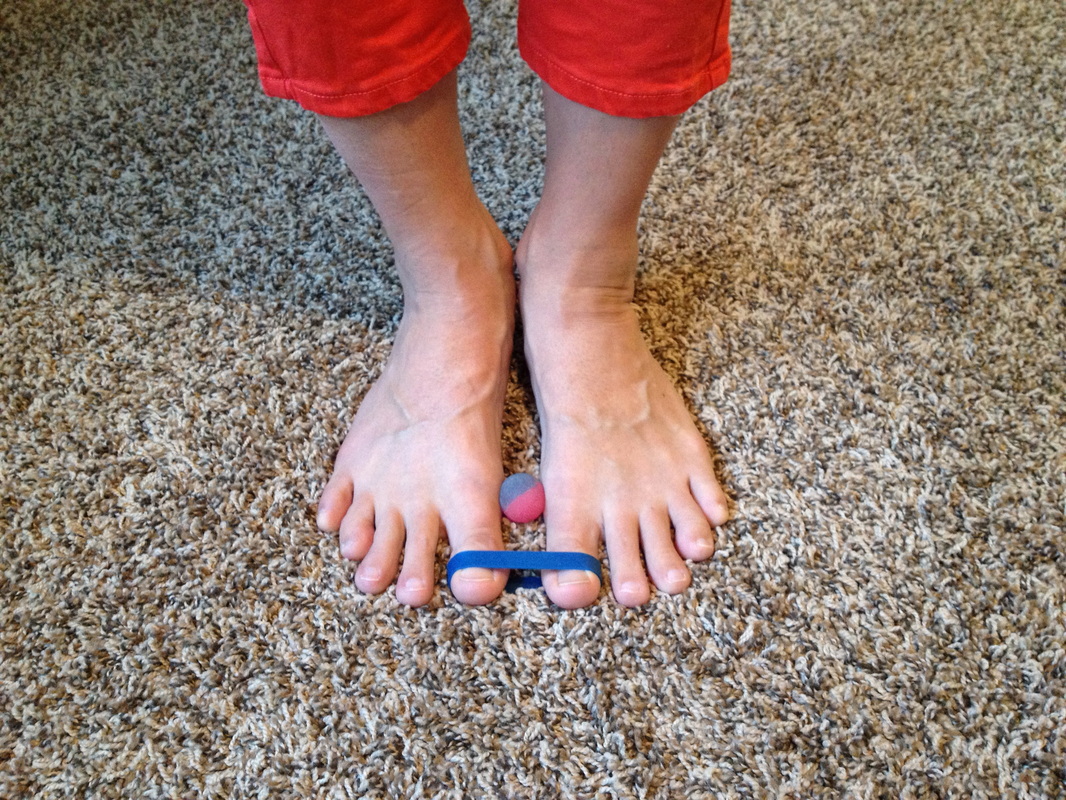
Bunion reducer: Sit or stand, place a small rubber ball between your big toe knuckles. Bring your heels together and place a rubber band (use the band that goes around broccoli or asparagus) around the middle of your big toes. Hold for 2-3 minutes. Now actively move your toes! Take the band off and stand hip width apart. Lift and spread your as far as you can and return. Repeat 10-20 times.
Susan McLaughlin is a physical therapist who specializes in the management of pelvic floor and orthopedic dysfunctions. She is the owner of ALIGN integration|movement in Salt Lake City, UT.  Helpful tips and other self care strategies can be found at www.alignintegrationandmovement.com.
14 Comments
<<Previous
Forward>>

    Author

    Susan McLaughlin,
    Physical Therapist

    Picture
    Susan McLaughlin Best Physical Therapist Salt Lake City
    Susan McLaughlin Best Physical Therapist Salt Lake City
    Susan McLaughlin, Best Physical Therapist Salt Lake City
    Picture
    Picture
    Picture
    Picture
    Picture

    FEEL GOOD SERIES:
    Movement videos for download

    Picture

    Products I love:

    Picture
    Picture
    Picture

    Props for home:

    Disclosure: I only recommend programs and products that I would use myself.  If you use these links to purchase something, I may earn a small commission at no additional cost to you.  Thank you.  

    Categories

    All
    Alignment
    Back Pain
    Breathing
    Chronic Pain
    Core Stabilization
    Fascial Health
    Foot Health
    Healing The Nervous System
    Hip Pain
    Knee Pain
    Lower Extremity
    Neck And Upper Extremity
    Pelvic Health
    Postpartum Healing
    Pregnancy
    Psoas Release
    Self Care
    Shoulder Girdle
    Shoulder Pain
    Si Joint Pain
    Spine
    Thoracic Mobility
    Transversus Abdominis
    Treatment For Si Dysfunction
    Walking
    Wrist

    RSS Feed

    Archives

    March 2026
    February 2026
    May 2025
    November 2022
    May 2022
    November 2021
    April 2021
    December 2020
    September 2020
    July 2020
    June 2020
    May 2020
    April 2020
    February 2020
    October 2019
    September 2019
    August 2019
    July 2019
    March 2019
    January 2019
    December 2018
    November 2018
    September 2018
    August 2018
    June 2018
    March 2018
    February 2018
    January 2018
    December 2017
    November 2017
    October 2017
    August 2017
    July 2017
    May 2017
    March 2017
    February 2017
    January 2017
    December 2016
    November 2016
    September 2016
    August 2016
    July 2016
    June 2016
    May 2016
    April 2016
    February 2016
    January 2016
    December 2015
    November 2015
    October 2015
    September 2015
    August 2015
    July 2015
    June 2015
    May 2015
    February 2015
    January 2015
    December 2014
    November 2014
    October 2014
    August 2014
    June 2014
    May 2014
    March 2014
    February 2014
    January 2014
    December 2013
    November 2013
    October 2013
    August 2013
    July 2013
    June 2013
    May 2013
    March 2013
    January 2013
    December 2012
    November 2012
    October 2012
    September 2012
    August 2012
    July 2012
    June 2012
    May 2012
    April 2012
    March 2012
    February 2012
    January 2012

Office:  1817 S Main Street, Suite 10 | SLC, UT 84115
Located in the Forrester Office Complex
Client Portal Sign In


ALIGN integration | movement, PLLC.  All rights reserved.
@2012-2025
​Medical Disclaimer        Privacy Policy & Terms of Use
Good Faith Estimate
​

Contact:  Susan McLaughlin, PT 801.859.4142
[email protected]