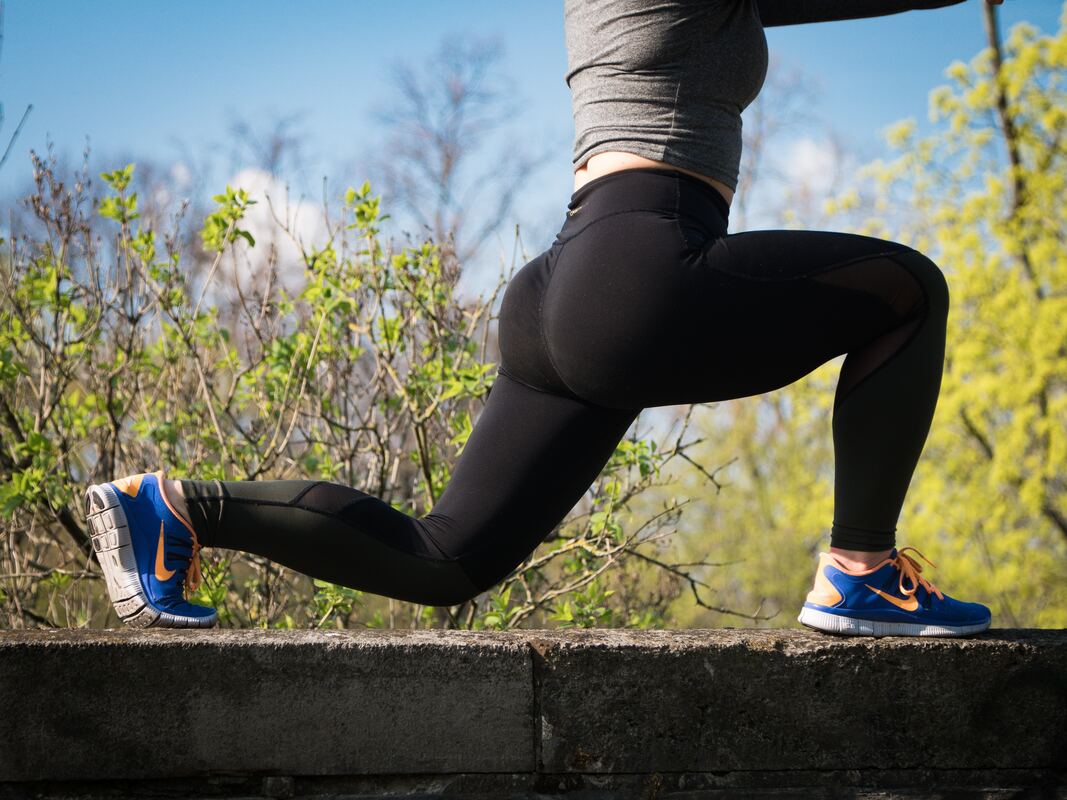
 | This October I attended a continuing education course: Functional Biomechanics of the Lower Quarter taught by Christopher Powers, PT, PhD, FACSM, FAPTA. I walked away from the weekend with much more appreciation for the gluteus maximus. The glute max works in 3 planes at the hip: extension (moving leg back behind the body), abduction (moving the leg away from the body out to the side), and external rotation (rotating the thigh so the knee moves outward). |
The glute max is key to controlling the trunk over the pelvis, to the stability of the pelvis and to the lower quarter. When the glutes are weak, you will see increased leaning of the trunk, excessive pelvic drop on non-weightbearing leg, and poor femur control (medial collapse of the knee & internal rotation of the femur). Dr. Powers says, "If something isn't being used, something else is being overused." If you have pain in your back, your hip, your knee, or your foot, stop right now and do this self assessment of your glut max. Video yourself and observe your trunk, your pelvis and your knee as you step down and back up from an 8 inch step.
Step Down Test
My glutes need some work on both sides, but notice that I have less control with my right leg in this test. I have a harder time keeping my trunk upright, my pelvis drops, and my knee collapses in and is wobbly. What I really like about Dr. Powers program is that he provides a systematic 8 level training program for the glut max. You cannot go to the next level until you are able to pass the lowest one with ease and control. I have provided the first level of glute training here. Have fun, and may you be blessed with buns of steel!
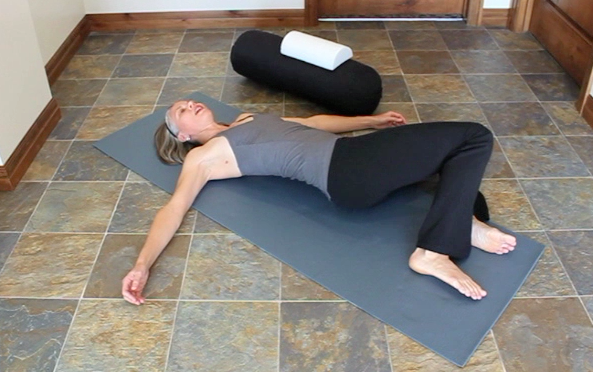
Glute Max Activation
Susan McLaughlin is a physical therapist who specializes in the management of pelvic floor and orthopedic dysfunctions. She is the owner of ALIGN integration|movement in Salt Lake City, UT. Helpful tips and other self care strategies can be found at www.alignforhealth.com.